


Home Aluminum alloys

Heat treatment of aluminum and light alloys

Objective: Improve the mechanical strength of aluminum alloys through structural hardening

Some aluminum alloys can be heat-treated to improve their mechanical properties (tensile strength, hardness, etc.).

This treatment involves structural hardening.
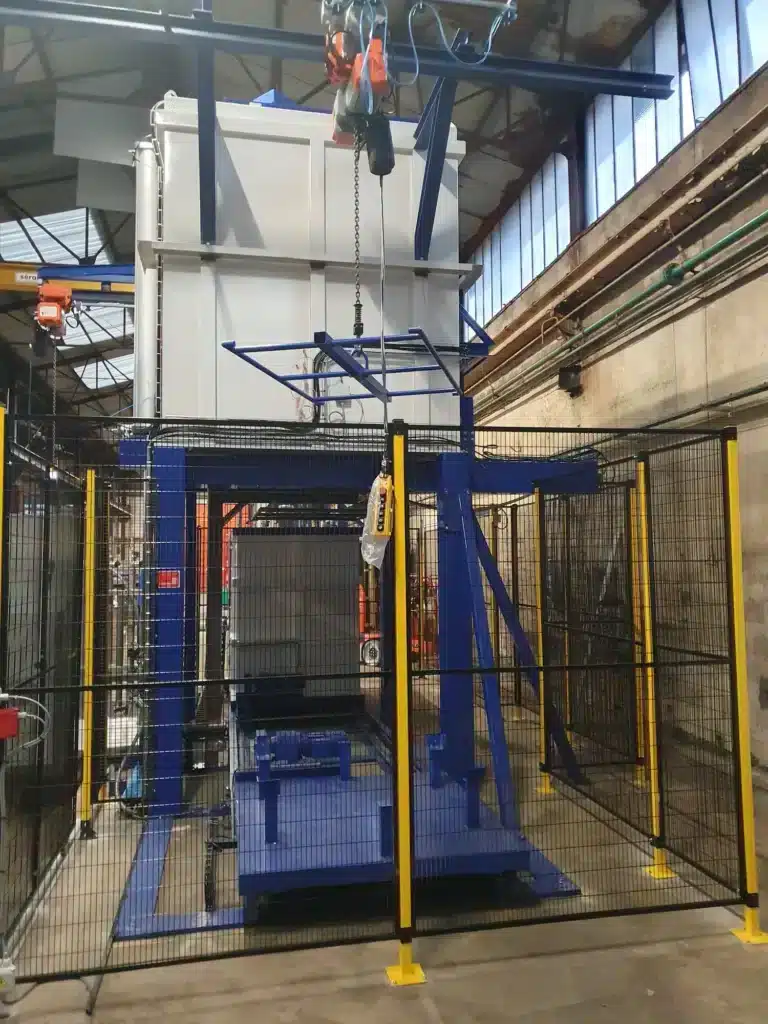
Light alloy and aluminum alloy treatment furnace

Our aluminum alloy treatment process

Putting into solution

The parts are heated to a temperature determined by the grade of aluminum alloy (approx. 480 to 540°C). As the name suggests, this stage brings the various constituents soluble in the solid solution into solution.

Quenching stage (cooling)

The parts are rapidly immersed in athermostatically-controlled water tank. Transfer time and water temperature are important factors in controlling the process: cooling must be sufficiently rapid to keep the solid solution supersaturated.

A polymer can be incorporated into the water to reduce the cooling rate and thus reduce the risk of cracking or deformation.

Maturation and/or income stage

Ripening allows the metallurgical structure to evolve at a relatively low temperature (often room temperature). Tempering takes place at a higher temperature than maturation. Depending on the alloy, one or two tempering operations may be carried out.

Hardening takes place during this stage.

The different states of treated aluminum alloys

T4: dissolved, soaked, matured

T6: solution treatment, quenching, tempering

T7: solution heat treatment, quenching, over-tempering (alloy 7000)

The main aluminum alloys for heat treatment

-2000 series: aluminum-copper

-6000 series: aluminum-magnesium-silicon

-7000 series: aluminum-zinc

    Features and benefits of aluminum alloy processing

    breaking strength

    After heat treatment, depending on the alloy, a tensile strength of 300 to 500 MPa (max. 600 MPa) can be achieved.

    Dimensional stability

    The annealing or stabilization technique guarantees the homogenization of aluminum parts.

    a controlled process

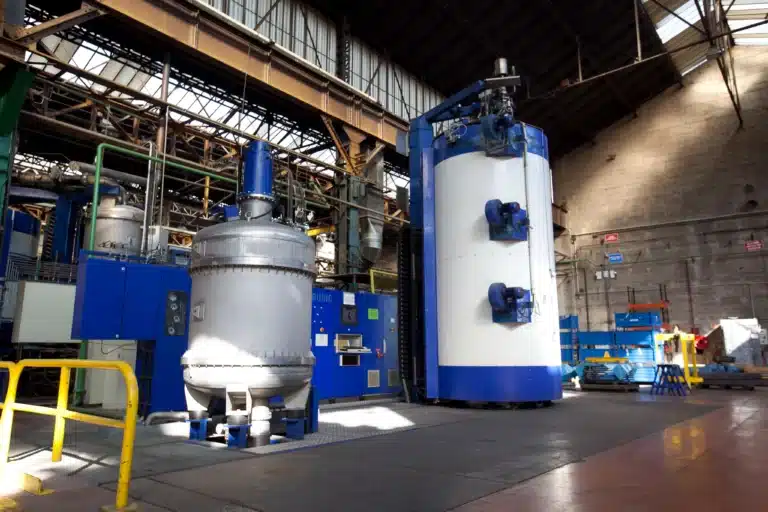
    Light alloys and aluminum require special heat treatment. The THERMILYON Group has mastered and improved these processes by investing in a water quenching furnace that guarantees extremely rapid and controlled cooling.

    Information to be communicated for study or order

    Information to be communicated :

    - Drawing of part, weight, number of parts per shipment and per month.
    - Nature of metal. Preferred AFNOR (or commercial) designation.
    - Previous treatment: specify temperatures
    - Desired specifications or stresses of the part.

    Ask for a quote

    business sectors concerned

    Aluminum alloys are highly appreciated for their lightness. We find them in sectors where perfect control of part weight is essential.

    Our various documentations
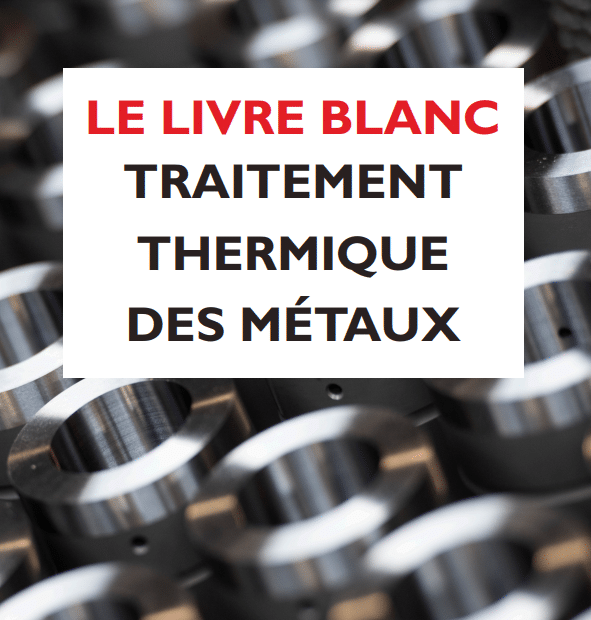
    Heat treatment white paper

    Aluminium alloys data sheet

    See all our documentation

    Our FAQs

    What types of parts are typically processed by low-pressure carburizing at Thermi Lyon?

    Parts requiring a high degree of cleanliness (e.g. holes, bores, finished parts), highly machined parts sensitive to deformation, stainless steel parts, etc.

    What do I need to know when requesting or placing an order for heat treatment?

    Type of steel, desired steel characteristics (hardness), quantity of parts per shipment and per year, part drawings and specifications. If possible, the operating mode of the part and its final use.

    Is it possible to harden an aluminum alloy?

    Yes, some aluminum alloys can be quenched and tempered to improve their mechanical strength. This treatment is only available for alloys from the 2000, 6000 and 7000 steel mills. 

    See all FAQs

    Do you have a question or a need?

    Let's talk about your heat-treatment project.

    Contact us

    Our latest news

    Understanding heat treatment.
    What are the implications of certifications for heat treatment in the aerospace industry?
    In the aerospace industry, every component must meet extreme standards for safety, performance, and reliability. Heat treatment plays a central role in achieving the desired mechanical properties, but it cannot be carried out without a strict framework for control and validation. This is where certifications and […] come into play.
    March 26, 2026
    What are the implications of certifications for heat treatment in the aerospace industry?
    Vacuum Deposition and Heat Treatment: Toward Ever More Effective Solutions?
    In an industrial landscape characterized by ever-increasing demands for reliability, durability, and performance, manufacturers are seeking solutions capable of optimizing the performance of their mechanical components. Heat treatment and vacuum coating have emerged as key technological solutions for addressing these challenges. Whether the goal is to increase […]
    March 24, 2026
    Vacuum Deposition and Heat Treatment: Toward Ever More Effective Solutions?
    stainless steel components requiring appropriate heat treatment
    What heat treatments are used for stainless steel components?
    Stainless steels are a family of materials that are essential in a wide range of industrial sectors, including medical, aerospace, automotive, tools, energy, and electronics. Their properties make them indispensable for critical components. However, even a material as high-performance as stainless steel requires considerable expertise to achieve its optimal performance. This is where treatments come in.
    March 2, 2026
    What heat treatments are used for stainless steel components?
    aerospace mechanical workshop in the Paris region
    Heat treatment in Île-de-France, a key driver for the performance of aerospace industry players
    With the presence of manufacturers, engine builders, equipment suppliers, and maintenance centers, the Île-de-France region occupies a strategic position in the European aerospace industry. In this environment, where every component must guarantee absolute safety, mastery of heat treatment in Île-de-France has become an essential factor in performance. Metal parts designed to fly, withstand [...]
    February 23, 2026
    Heat treatment in Île-de-France, a key driver for the performance of aerospace industry players
    How does vacuum deposition improve resistance to friction and wear?
    In many industrial sectors, component wear remains one of the main causes of reduced performance, premature failure, and additional maintenance costs. Faced with these constraints, the use of vacuum coatings has emerged as a leading technological solution for improving the durability of parts subjected to repeated friction. Thanks to […]
    February 2, 2026
    How does vacuum deposition improve resistance to friction and wear?
    tray containing medical devices made of steel and heat treated
    The role of heat treatment in extending the service life of medical components
    In the medical sector, every instrument, implant, or assembly component must guarantee an impeccable level of reliability. Parts are subjected to demanding conditions: constant contact with the human body, exposure to chemical agents, repeated mechanical stress, and intensive sterilization cycles. To ensure consistent performance over time, it is […]
    January 21, 2026
    The role of heat treatment in extending the service life of medical components