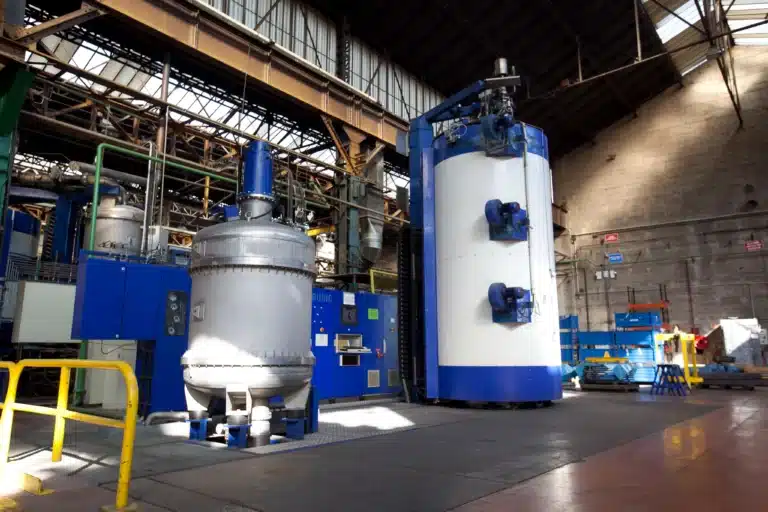




In the aerospace industry, every component must meet extreme requirements for safety, performance, and reliability. Heat treatment plays a central role in achieving the desired mechanical properties, but it cannot be carried out without a strict framework for control and validation.
This is where aerospace certifications and qualifications come into play; they have become a cornerstone of this sector of excellence. They ensure that the processes used meet very high quality standards and that the parts produced can be incorporated with confidence into critical applications.
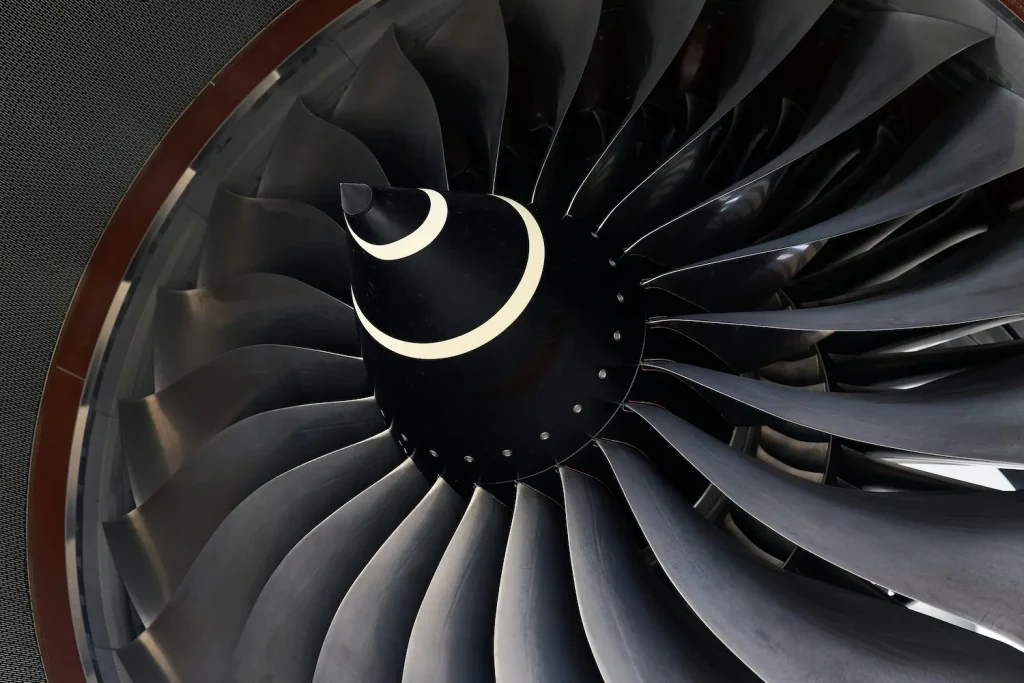
Heat treatment: a critical process in the aerospace industry
Why heat treatment is essential in this industry
In the aerospace industry, metal parts are subjected to extremely high mechanical, thermal, and environmental stresses. Heat treatment improves the strength, hardness, fatigue resistance, and dimensional stability of materials. Without these processes, many components would not be able to achieve the performance levels required for safe flight.
Certification serves as an additional assurance here: it confirms that every stage of the process is under control and meets the requirements of the aviation industry.
Particularly high technical requirements
The tolerances allowed in the aerospace industry are extremely tight. Even a slight variation in temperature, duration, or processing atmosphere can have significant consequences on a part’s final properties. Manufacturers must therefore rely on processes that are fully reproducible, documented, mastered, and strictly controlled. Certification and qualification processes enforce this rigor and structure work methods around a high standard of excellence.
Understanding the Certification Process in Aviation
Definition and Objectives of an Aviation Certification
Certification encompasses all standards, audits, and qualifications designed to validate heat treatment processes. Its purpose is to ensure that equipment, methods, and personnel capabilities consistently produce results that meet aerospace specifications.
This certification applies not only to the machines but also to the overall organization: document management, batch traceability, staff training, and monitoring of critical parameters.
The main certifications and standards in the aviation industry
The aerospace industry relies on strict standards and guidelines set by major contractors and certification authorities. These guidelines apply to both the civil and military sectors of the aerospace industry. They regulate heat treatment processes to ensure a consistent level of quality on an international scale. Certification thus serves as a common language among all stakeholders in the industrial supply chain.
EN 9100
Certification EN 9100 defines the requirements for quality management systems specific to the aerospace and defense sectors.
Today, it serves as an essential standard for companies operating within the aerospace supply chain, ensuring that contractors maintain high standards of quality, safety, and reliability.
Nadcap Heat Treatment
The Nadcap program is an international accreditation system focused on specialized processes used in the aerospace and defense industries. These specialized processes include heat treatment, surface treatment, and non-destructive testing.
Accreditation Nadcap Heat Treating thus certifies a supplier’s ability to apply and control heat treatment processes in accordance with the requirements of major aerospace contractors.
Within the Thermilyon Group, this accreditation specifically covers thermal and thermochemical treatments.
Qualifications of contracting entities
In addition to EN 9100 certifications and Nadcap accreditations, major aerospace contractors implement their own supplier qualification and listing processes.
These specific certifications enable customers to ensure that their industrial partners meet their specific requirements for safety, reliability, and compliance—which are essential for the manufacture of critical aerospace components.
The direct impacts of certifications on manufacturers
A guarantee of quality and reliability for aerospace components
Certification significantly reduces the risk of non-compliance or component failure. By relying on certified processes, manufacturers gain better control over mechanical properties and enjoy greater long-term reliability. This approach is essential for critical components, where even the slightest failure can have serious consequences.
A tool for regulatory and contractual compliance
In the aerospace industry, certification is increasingly becoming an essential requirement—indeed,a sine qua non—for gaining access to markets. It meets the regulatory and contractual requirements imposed by aircraft manufacturers and suppliers. Without certification or qualification, it is difficult, if not entirely impossible, to work on most aerospace programs—especially the most recent ones—for obvious safety reasons.
Aviation certifications: a key factor in competitiveness
Standing out in a highly competitive and demanding market
Beyond the regulatory aspect, aviation certification is a genuine competitive advantage. It highlights industrial expertise and strengthens a supplier’s credibility with its customers. In a sector as demanding as aerospace, being certified allows a company to position itself as a reliable, mature, and sustainable partner.
Process optimization and continuous improvement
Certification processes encourage continuous process improvement. They prompt companies to analyze their practices, train their teams, control their processing parameters, and invest in high-performance equipment. This approach often results in better control over costs, lead times, and overall quality.
The challenges associated with compliance and maintaining certifications
Technical, human, and financial constraints
Establishing and maintaining aviation certification requires a significant investment. This involves adapting equipment, training staff, and ensuring rigorous traceability of operations. While these requirements can be burdensome for some companies, they are essential for meeting the standards of the aviation industry.
The Importance of Partnering with a Certified Provider
In light of these challenges, many manufacturers choose to entrust their heat treatment processes to specialists who hold the necessary certifications and qualifications. Working with a certified partner ensures process reliability, saves time, and provides access to specialized expertise in compliance with aerospace standards.
Why is certification essential for the future of the aviation industry?
Advances in materials, the integration of new technologies, and increasing safety requirements make certification more essential than ever. It serves as an indispensable foundation for supporting innovation in the aerospace industry while ensuring the highest level of reliability.
Certification plays a central role in heat treatment in the aerospace industry. It guarantees the quality, compliance, and performance of parts while enhancing the competitiveness of industrial players. In an industry where excellence is a must, relying on certified processes and specialized partners such as Thermi-Lyon, Thermi-Loire, Thermi-Garonne, or Thermi-Picardie—production sites of the Thermilyon Group— is a strategic choice for meeting the current and future challenges of the aerospace industry.