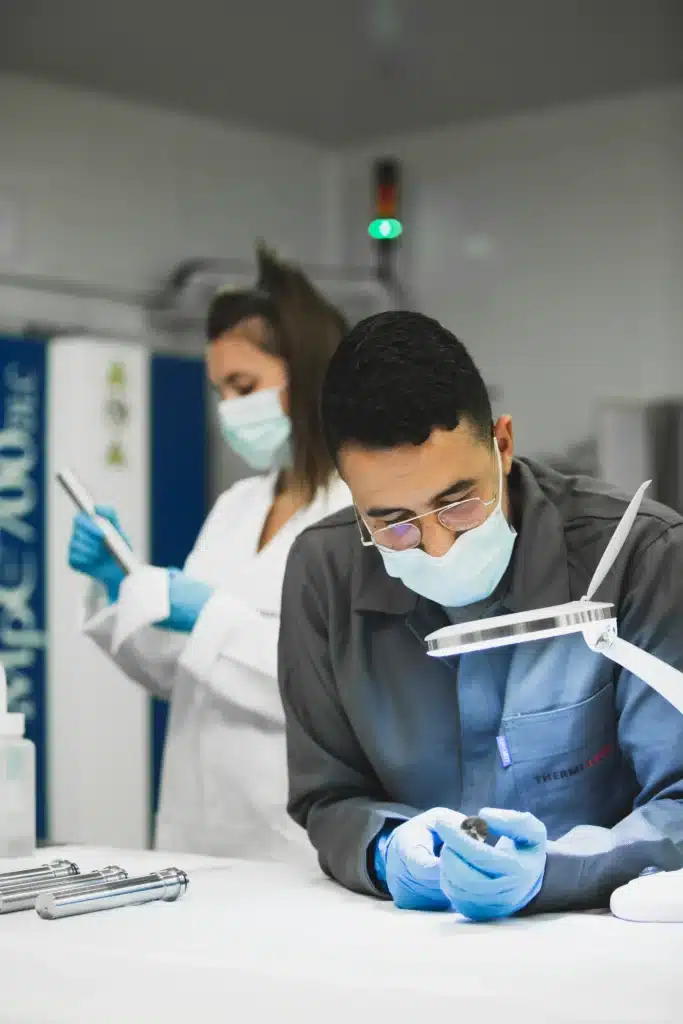



In the aerospace industry, supplier qualification is a key factor in ensuring the compliance of specialized processes and securing the supply chain. The Airbus Helicopters qualification illustrates these requirements for heat treatment operations, where precise control of treatment parameters directly contributes to achieving the expected metallurgical and mechanical properties of the parts.
The requirements of clients such as Airbus Helicopters thus go beyond mere quality system certification. They are based on a detailed assessment of subcontractors’ industrial capabilities, taking into account the materials, heat treatments, and criticality of the parts in question.
Against the backdrop of increasing production rates in the aerospace industry, these certifications also play a crucial role in ensuring industrial capacity and meeting deadlines.
Customer Qualification: A Requirement Specific to Special Processes
In the aerospace industry, heat treatment is one of the specialized processes for which compliance cannot always be fully verified by inspecting the finished product alone. Mastering the manufacturing process is therefore critical.
Quality certifications applicable to the sector—notably EN 9100—as well as Nadcap accreditation, form an essential foundation for structuring industrial practices. Customer qualifications complement this framework by verifying a subcontractor’s ability to perform operations that meet the specific requirements of each client.
These qualifications may include, among other things:
- The materials processed, based on their grades and metallurgical properties;
- The heat treatments used, such as quenching, solution treatment, aging, or annealing;
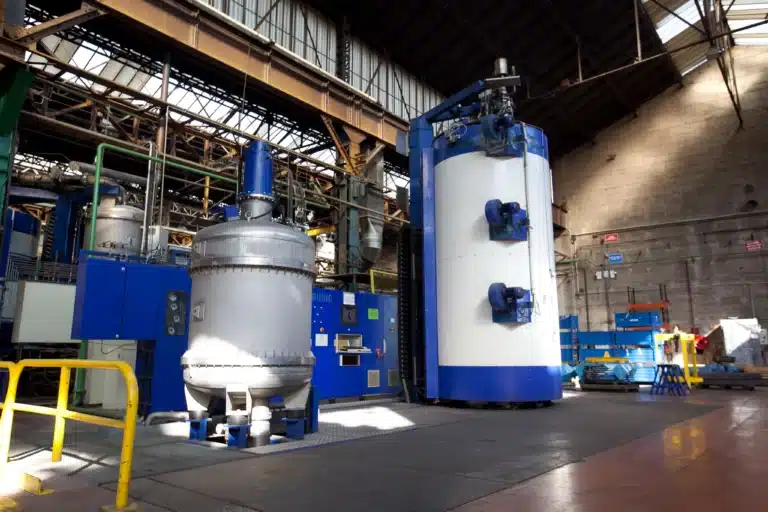
- Industrial equipment, the specifications and performance of which must be suited to the relevant processes;
- Operational control, including team competencies, processing parameters, and monitoring methods;
- Traceability and repeatability are essential for demonstrating the compliance of the operations performed.
Airbus Helicopters: A Qualification Tailored to Component Requirements
Supplier qualification meets requirements specific to each customer. In the case of Airbus Helicopters, the scope of qualification is based, in particular, on a combination of several factors: the material, the furnace, the type of heat treatment, and the criticality of the part.
This approach makes it possible to evaluate the supplier’s capabilities with respect to the specific applications in question, rather than treating heat treatment as a generic service. The distinction between secondary, important, and critical parts is particularly significant. The applicable level of requirements depends, in particular, on the criticality of the part and the requirements defined by the manufacturer.
Access to the production of critical parts therefore requires a thorough demonstration of industrial expertise and compliance with applicable requirements. For certain qualifications, this process may involve several audits and additional evaluations.
Meeting these requirements involves demonstrating a genuine ability to master new combinations of materials, equipment, and processes, while maintaining the expected level of compliance.
Scale-up: Ensuring Heat Treatment Capacity
The increase in aerospace production rates heightens the challenges related to the availability of industrial resources. Your heat treatment needs must be met in accordance with quality, traceability, and compliance requirements, as well as expected lead times.
In this context, ensuring the security of production resources is a major challenge. The qualification of alternative solutions—when provided for within the applicable scope—helps, in particular, to limit dependence on a single piece of equipment.
Having qualified backup resources for the relevant processes thus helps ensure production continuity. This organizational structure makes it possible to consider fallback solutions without deviating from the qualification framework defined by the client.
As a heat treatment service provider, our ability to support you does not rely solely on our equipment or production volumes. It also depends on our operational expertise, our ability to anticipate industrial contingencies, and our capacity to ensure that the treatments we perform remain in compliance with regulations.
These elements contribute to a common goal: securing your supply and helping you manage your industrial challenges.
Thermi-Garonne: Airbus Helicopters Qualification Expanded to Include Critical Parts
In this context, and to meet the requirements of our aerospace customers, we are expanding our industrial capabilities and qualifying our scope of operations in line with the sector’s needs.
As a result, our Thermi-Garonne facility has secured an expansion of its qualification scope with Airbus Helicopters, which now includes the manufacture of critical parts.
This development builds on an initial qualification obtained in 2015. It now covers a broader range of materials and heat treatments, as well as qualified backup systems for the furnaces and treatment types in question.
The certification of critical parts required, in particular, several audits by Airbus Helicopters and the European Union Aviation Safety Agency (EASA).
This development clearly illustrates the requirements associated with the qualification of heat treatment processes in the aerospace industry, as well as the importance of equipment control, traceability, and the safeguarding of industrial capabilities.
Our commitment: to support you with proven processes, manufacturing capabilities tailored to your requirements, and a constant focus on the quality and reliability of your parts.