

In an industrial landscape characterized by ever-increasing demands for reliability, durability, and performance, manufacturers are seeking solutions capable of optimizing the performance of their mechanical components. Heat treatment and vacuum coating have emerged as key technological solutions for addressing these challenges.
Whether the goal is to increase wear resistance, improve mechanical properties, or ensure consistent quality, these processes are constantly evolving. This raises the question: Do vacuum coatings and heat treatments now make it possible to achieve unprecedented levels of performance?
Heat Treatments and Vacuum Deposition: Key Points
What is heat treatment?
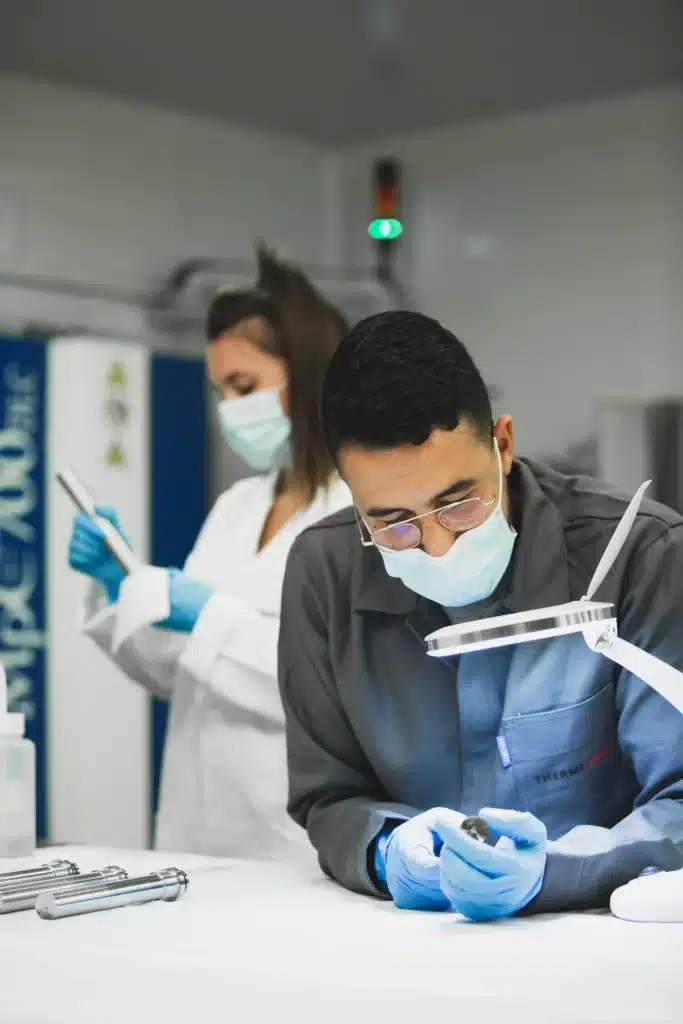
Heat treatment encompasses a set of processes designed to modify the internal structure of a material—most often metal—through controlled heating and cooling cycles. Depending on the desired objectives, it can increase the hardness, mechanical strength, or service life of parts.
These treatments are essential in sectors where precision and reliability are critical. Combined with vacuum deposition, they offer a comprehensive approach, acting on both the core and the surface of components.
Vacuum deposition: principles and benefits
Vacuum deposition involves applying a very thin layer to the surface of a part within a high-vacuum chamber. This technology produces layers that are extremely uniform, highly adherent, and high-performance.
Vacuum deposition is particularly valued for its ability to enhance wear resistance, reduce friction, and even provideanti-adhesive properties without altering the dimensions of the treated parts.
Why have these processes become indispensable today?
Increasingly stringent industrial requirements
Industrial components are subjected to increasingly severe mechanical, thermal, and chemical stresses. To address these challenges, manufacturers are seeking reliable and durable solutions. Vacuum deposition meets these needs by significantly improving surface performance while seamlessly integrating into demanding production lines.
The pursuit of precision, repeatability, and longevity is thus driving companies to adopt these advanced technologies.
Sectors driving innovation
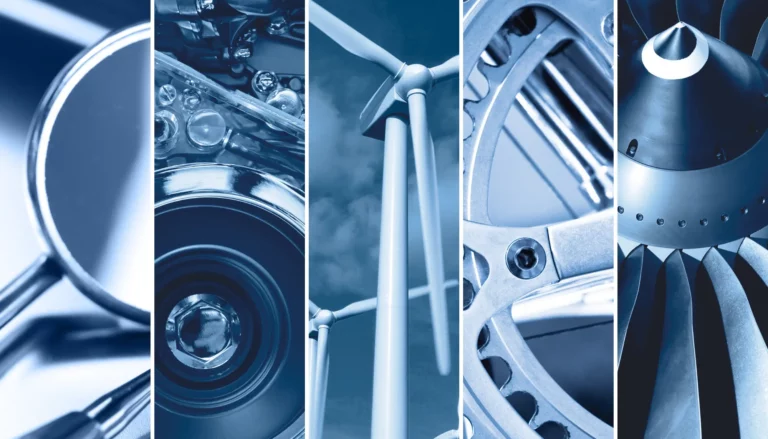
The aerospace, medical, precision tooling, and automotive industries are among those with the highest demand. In these fields, even the slightest failure can have major consequences. Vacuum deposition, combined with appropriate heat treatments, ensures the long-term performance of components.
Toward ever more effective solutions: what changes are on the horizon?
Optimization of heat treatment processes
Heat treatment processes have evolved significantly in recent years. The cycles are now precisely controlled in order to minimize distortion and ensure optimal treatment uniformity. This precision is essential for preparing surfaces prior to vacuum deposition, thereby ensuring maximum adhesion and effectiveness of the coating.
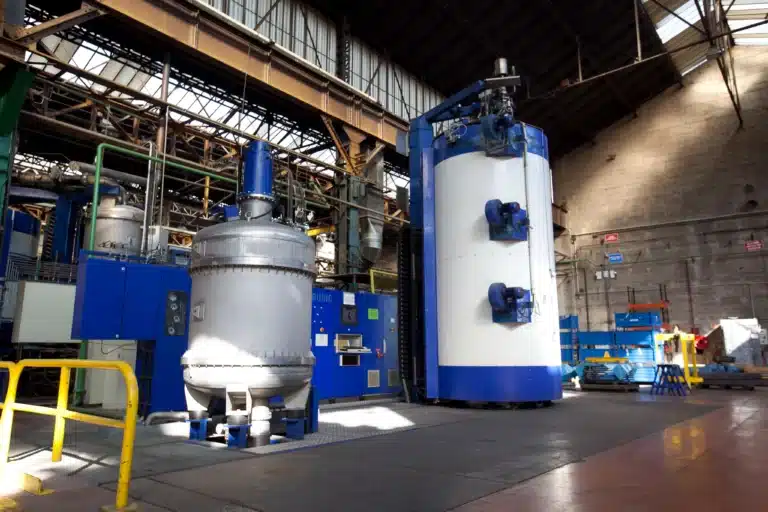
To address current environmental challenges, thermal treatment facilities are undergoing optimization aimed at decarbonization. This transformation relies primarily on two complementary technological approaches: the use of electricity to replace traditional fossil fuels, and the use of vacuum technologies, which enable the required temperatures to be reached with significantly reduced energy consumption.
Innovations in vacuum deposition
Vacuum deposition processes are also benefiting from constant innovation. Multilayer coatings, for example, combine several properties: hardness, wear resistance, and low friction. These advances pave the way for customized solutions capable of adapting to complex geometries and highly specific applications.
Recent advances in PVD processes have made it possible to reduce production cycle times, thereby optimizing industrial productivity, while also lowering the processing temperatures required to achieve a high-quality coating.
This twofold improvement yields significant benefits: first, lower process temperatures help preserve the treated substrates. Second, shorter cycle times directly contribute to improved plant productivity.
Ainsi, le panel de matériaux compatibles avec les revêtements PVD s’est considérablement élargi, incluant désormais des substrats auparavant incompatibles avec les températures des process. Des températures de traitement <100°C sont à présent possible. Ces développements ouvrent ainsi de nouvelles perspectives d’application dans des secteurs industriels variés, depuis l’aéronautique jusqu’aux objets design, en passant par l’outillage de précision et les dispositifs médicaux.
The tangible benefits for manufacturers
The combination of heat treatment and vacuum coating offers measurable benefits. Treated parts exhibit extended service life, significantly reduced maintenance costs, and improved functional performance.
These benefits also translate into better compliance with standards and specifications, a key factor for regulated industries subject to strict regulatory requirements.
The Importance of Support and Industry Expertise
Tailor the treatment to the actual use of the rooms
Every industrial application is unique. The decision to use heat treatment or vacuum coating cannot be made without a thorough analysis of the actual operating conditions. This evaluation phase is critical to ensuring that the chosen solution is appropriate and effective.
The key role of an expert partner
Work with a specialist such as the Thermilyon Group provides access to comprehensive technical support. From initial analysis to final validation, our industry expertise ensures the implementation of tailored, reliable, and fully controlled treatments, regardless of the sectors involved.
Vacuum deposition and heat treatment now play a central role in industrial performance. Their constant evolution enables us to offer solutions that are increasingly reliable, durable, and tailored to new requirements.
Beyond the technology itself, it is the quality of our support and our mastery of these processes that make the difference, paving the way for enhanced and sustainable performance for manufacturers.