


Home Press hardening

Press hardening

Objective: limit part deformation.

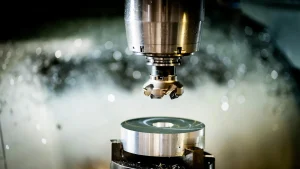
Press-hardening is a technology for limiting deformations caused by hardening. During the quenching and cooling phase, the part is held in a tool to contain its geometry and deformations.

This type of hardening is particularly suitable for finished, thin and/or complex-shaped parts. There is no need for re-machining.

This process is carried out at the Thermi-Loire site.
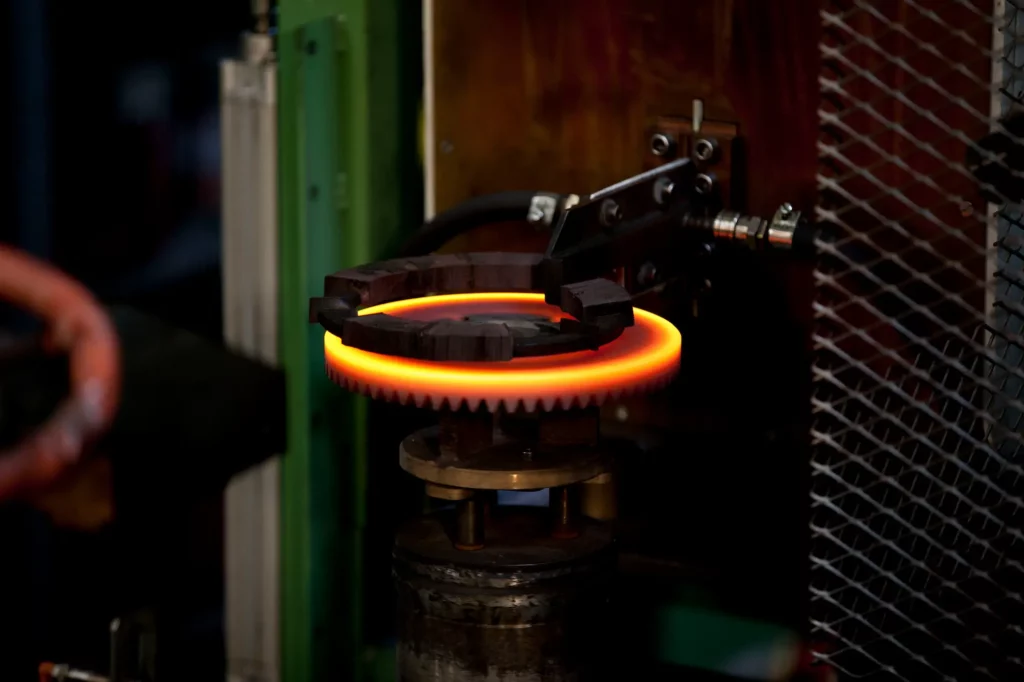
press-hardened part

Our process

Part type

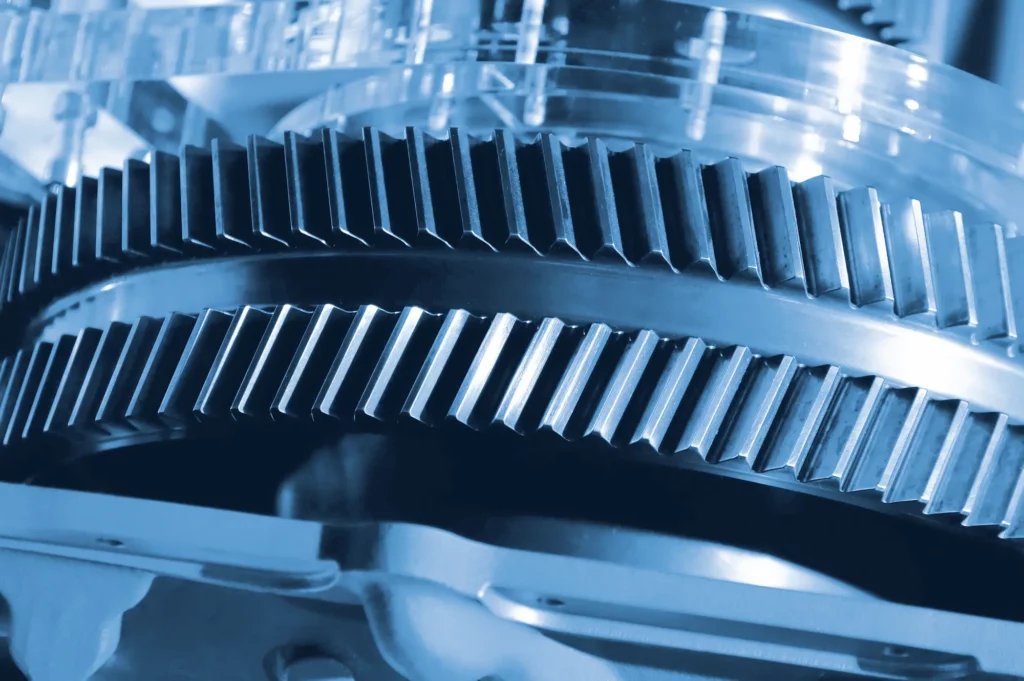
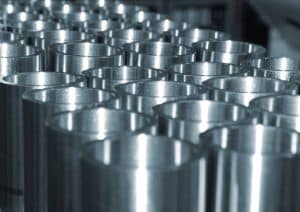
The main families of parts processed include bushes, crown gears and bevel gears.

The size of the press accepts parts up to 16 inches in diameter (approx. 400 mm).

Heating

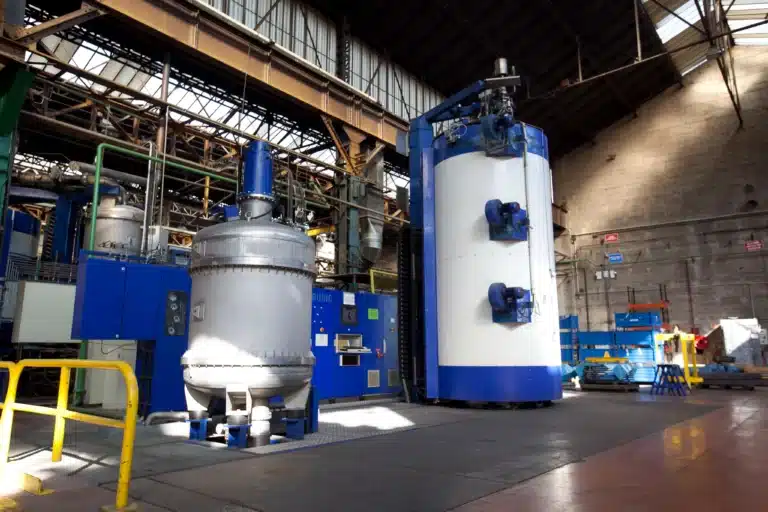
For reasons of flexibility, we have developed an electromagnetic induction heating system, enabling us to switch the system on and off as required. An optical camera measures room temperature.

Oil tempering

During oil quenching, the part is held in a punch-die tool. A robot handles loading and transfer under the press, for maximum productivity.

    Features and benefits

    limited deformations

    Press-hardening offers the possibility of hardening finished parts without deformation, or rather with a level of deformation compatible with the part's dimensional tolerance.

    Productivity

    Parts are hardened individually by robot, ensuring high reproducibility and productivity. Press-hardening technology is particularly well-suited to mass production.

    Complex shapes and finished parts

    This type of treatment is particularly suitable for thin-walled parts where machining techniques sometimes do not allow the parts to be reworked.

    For study and order

    Information to be communicated :

    - Part drawing, specification, weight.
    - Number of parts per shipment and per year.
    - Type of metal: standardized name Specification of the layers to be produced (with machining allowance if applicable).
    - Conventional depth (in case of case-hardening), surface hardness (core hardness results from the steel grade), deformation tolerance.

    Ask for a quote

    Press hardening

    Video thumbnail

    business sectors concerned

    Press-hardening is particularly suited to markets requiring high productivity.

    Our various documentations

    Our FAQs

    What is vacuum deposition?

    Vacuum deposition is a surface treatment used to deposit a material or alloy on a mechanical part.

    The use of vacuum technology ensures a perfectly clean, non-polluting process.

    It is not subject to REACH legislation.

    What are the advantages of PVD technology?

    This process greatly increases resistance to wear, abrasion, friction and corrosion. As a result, component life is greatly extended.

    Standard thicknesses are of the order of 3µm and deposition is carried out on finished parts.

    What's the difference between PVD and PACVD?

    PVD is physical vapor deposition. The element to be deposited is obtained by evaporation or sputtering via a physical process. PACVD is plasma-assisted chemical vapor deposition. The element to be deposited is obtained from chemical reactions. Plasma enables this chemical reaction to take place at lower temperatures.

    What are the industrial applications of vacuum deposition?

    Vacuum deposits are classified into several categories: anti-wear, friction, decorative and biocompatibility. The applications are therefore very varied: automotive components, aerospace, tooling, cutting tools, medical devices, decorative parts...

    How do I choose the right deposit method?

    The deposition method depends above all on the nature of the coating to be deposited and the substrate.

    If the substrate cannot be heated to high temperature, the deposition must be carried out using low-temperature technology.

    If the coating to be deposited consists of a solid element (metal or graphite target), a physical process such as PVD is used. If the coating consists of a gas or liquid, a chemical process such as CVD or PACVD is used.

    What is the purpose of case-hardening? 

    Incorporate carbon below the surface of the steel part to improve fatigue and wear resistance on the surface, while maintaining good core mechanical properties.

    See all FAQs

    Do you have a question or a need?

    For all your projects, our dedicated teams are at your service.

    Contact us

    Our latest news

    Understanding heat treatment.

    How does vacuum deposition improve resistance to friction and wear?
    In many industrial sectors, component wear remains one of the main causes of reduced performance, premature failure, and additional maintenance costs. Faced with these constraints, the use of vacuum coatings has emerged as a leading technological solution for improving the durability of parts subjected to repeated friction. Thanks to […]
    February 2, 2026
    How does vacuum deposition improve resistance to friction and wear?
    tray containing medical devices made of steel and heat treated
    The role of heat treatment in extending the service life of medical components
    In the medical sector, every instrument, implant, or assembly component must guarantee an impeccable level of reliability. Parts are subjected to demanding conditions: constant contact with the human body, exposure to chemical agents, repeated mechanical stress, and intensive sterilization cycles. To ensure consistent performance over time, it is […]
    January 21, 2026
    The role of heat treatment in extending the service life of medical components
    stainless steel industrial parts, illustrating how heat treatment increases the service life of mechanical parts
    How can heat treatments extend the service life of parts?
    In all industrial sectors, including automotive, aerospace, medical, and tooling, the reliability and durability of mechanical parts are major challenges. During operation, thermal cycles, friction, and corrosion put materials to the test. However, there is a range of proven solutions to sustainably enhance the performance of these components […]
    December 29, 2025
    How can heat treatments extend the service life of parts?
    plastic injection machine
    Plastic injection molding: how to improve the demolding of your parts?
    In the field of plastic injection molding, demolding is a crucial and delicate step. At this stage, even the slightest adhesion between the part and the mold can cause cosmetic defects, deformations, or longer cycle times. These often recurring problems directly impact productivity and tool durability. For […]
    December 18, 2025
    Plastic injection molding: how to improve the demolding of your parts?
    vacuum deposition and coating for the aerospace industry
    Vacuum and high-temperature deposition: what solutions for the aerospace industry?
    The aerospace industry operates in an environment where material performance is a prerequisite for safety. Parts used in engines, turbines or fastening systems have to withstand extreme temperatures, repeated friction and thermal variations, often sudden and cyclical. As part of this quest for reliability, vacuum coatings, and more specifically vacuum treatments, are [...]
    December 4, 2025
    Vacuum and high-temperature deposition: what solutions for the aerospace industry?
    medical production line with components processed in clean oven
    Heat treatment in clean furnaces: a key challenge for the aerospace and medical industries
    In sectors where reliability and safety cannot be compromised, heat treatment plays an essential role. This is the case in the aerospace and medical sectors, where the quality of parts has a direct impact on the performance and safety of users. To meet these requirements, the use of a clean oven [...]
    November 17, 2025
    Heat treatment in clean furnaces: a key challenge for the aerospace and medical industries