
In all industrial sectors, including automotive, aerospace, medical, and tooling, the reliability and strength of mechanical parts are major challenges. During operation, thermal cycles, friction, and corrosion put materials under severe stress. However, there is a range of proven solutions for sustainably enhancing the performance of these components: heat treatments.
Let's see how heat treatment can transform your parts into stronger, more durable components.

Why is the lifespan of parts a major industrial issue?
Each mechanical part plays a role in the proper functioning of an industrial system. Premature wear can lead to production downtime, high maintenance costs, and even critical failures.
Today's production environments require components that can withstand intense mechanical and thermal stresses. Optimizing the service life of parts therefore improves the overall performance of a production line.
Heat-treated parts meet this challenge by offering improved resistance to wear, fatigue, and deformation. This solution combines reliability and cost-effectiveness by reducing the need for frequent replacement.
Heat treatment: an essential lever for strengthening parts
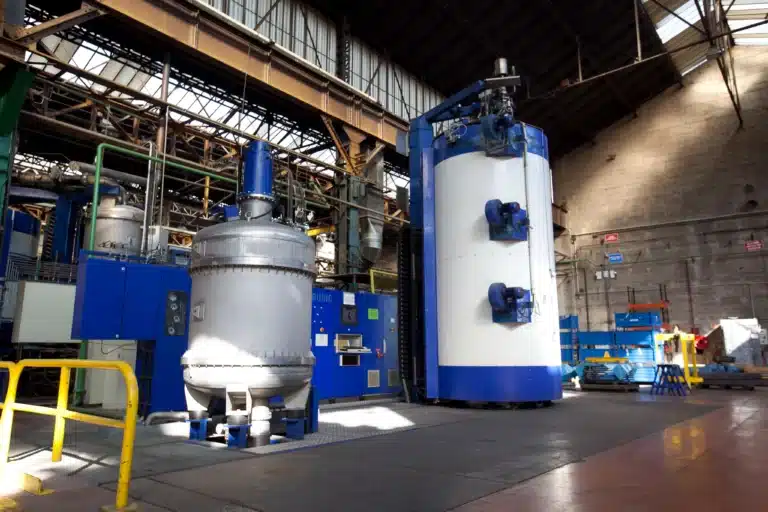
Heat treatment involves heating a metal to a specific temperature, holding it there for a certain amount of time, and then cooling it in a controlled manner. This process changes the internal structure of the material and improves its mechanical properties.
The objective is simple: to increase the hardness, strength, and stability of metals. By adjusting the heating and cooling cycles, engineers can adapt the characteristics of each component to its end use.
Parts treated in this way benefit froma homogeneous internal structure and improved corrosion resistance and increased durability. This type of treatment is now becoming standard in many demanding industrial sectors.
The main heat treatments to extend the service life of parts
Quenched and tempered: the classic duo of heat-treated parts
Hardening involves heating the metal and then cooling it rapidly (often in oil, water, or using a neutral gas) in order to harden it. Tempering, which follows hardening,softens the structure slightly to prevent embrittlement.
This combination of treatments is ideal for steels used in tooling, automotive components or precision mechanical components. It offers an excellent balance between hardness and resilience.
Carburizing and nitriding: Strengthening the surface without weakening the core
These processes aim to enrich the surface of a metal with alloying elements (carbon or nitrogen), creating an extremely hard and wear-resistant surface layer.
The parts treated using these processes retain a tough core capableof absorbing shocks, while offering a hard, anti-friction surface. They are particularly suitable for gears, shafts, and transmission axles.
Vacuum treatments: Precision and quality under control
Vacuum heat treatment guarantees a perfectly controlled atmosphere, free from oxidation and contamination. The results areremarkably consistent, with impeccable surface cleanliness.
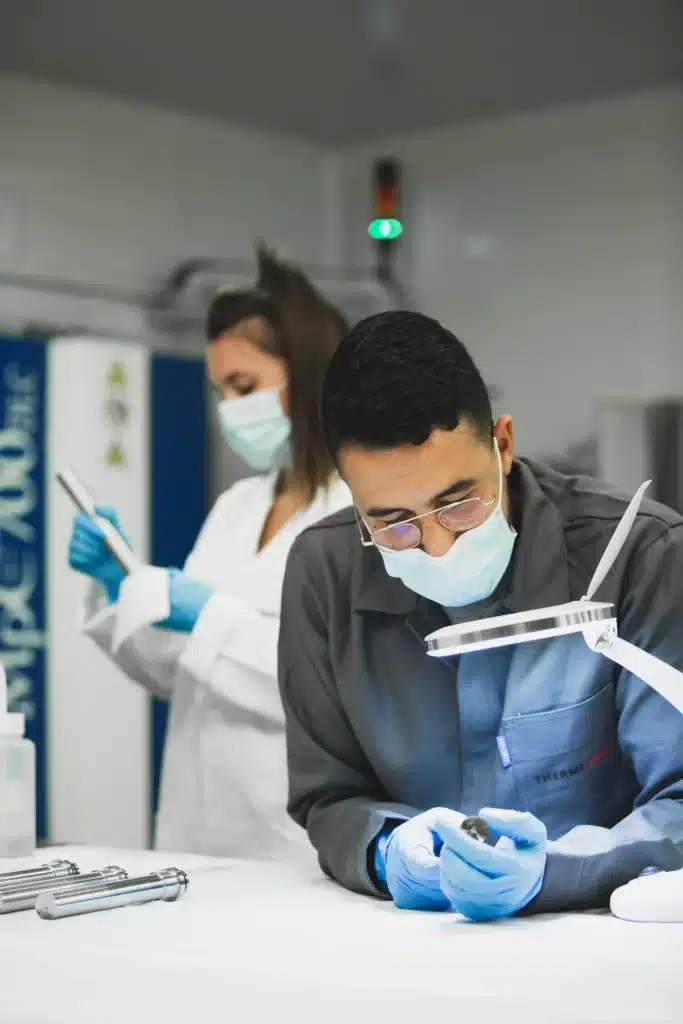
This process, widely used by the Thermilyon Group, is ideal for the medical and aerospace sectors, where every micron of precision counts. Parts heat treated under vacuum benefit from maximum reliability.
The concrete benefits of heat treatment on durability
The results are measurable: a well-adapted treatment can double, triple or even quintuple the service life of a part. By limiting deformation, wear and the risk of breakage, italso reduces maintenance and machine downtime costs.
For manufacturers, this translates into improved productivity and increased equipment reliability. Heat-treated parts also offer better dimensional stability, which is essential for precision or safety-critical components.
In the long term, these performance gains more than justify the initial investment in treatment, especially when it is carried out by a recognized expert such as Thermilyon.
How to choose the right treatment for your parts?
The choice of process depends on several factors:
- The composition of the alloy
- The mechanical stresses experienced
- The operating environment (corrosive, humid, abrasive, etc.)
- The expected mechanical and dimensional characteristics .
Technical support is often essential in order to define the best hardening strategy. The experts at Thermilyon analyze each requirement and recommend the most suitable treatment.
Heat treatments specifically tailored to the parts thus guarantee the best compromise between performance, safety, and overall cost.
Enhancing the durability of industrial parts is not just a matter of performance: it is a strategic lever for any company seeking to increase reliability and competitiveness.
Thanks to heat treatments, your components become more resistant, more stable, and more efficient over the long term. When you call on the Thermilyon Group, you can be sure of a controlled result, tailored to your constraints and industrial objectives.
👉 Discover our heat treatment processes and contact our experts at Thermilyon for a customized assessment of your parts.