
The automotive industry is constantly on the lookout for higher performance, stronger materials and more durable components. To meet these challenges, stainless steel plays a key role in many critical vehicle parts. Its excellent corrosion resistance makes it a valuable ally. But for certain applications subject to heavy mechanical stress, its original properties may prove insufficient. This is where stainless steel hardening comes into play, a key stage in improving the durability of parts, without compromising their resistance to aggressive environments.
Why harden stainless steel in the automotive industry?
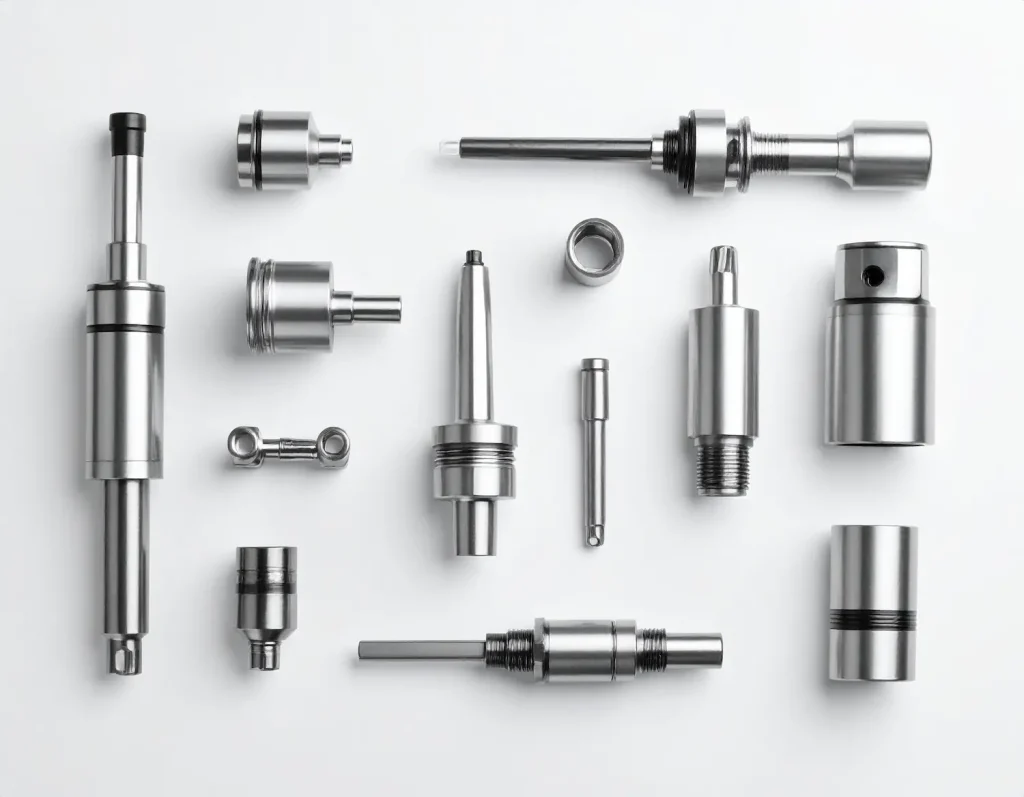
In the automotive sector, stainless steel parts have to withstand extreme conditions: high temperatures, repeated friction, intense mechanical pressure. Components such as valves, injectors and fasteners are directly concerned. Hardening enhances wear resistance and extends service life, while preserving the intrinsic qualities of stainless steel. A necessity for manufacturers seeking to combine reliability, reduced maintenance costs and lightweight materials.
The mechanical limits of untreated stainless steel
Although stainless steel is prized for its resistance to corrosion, its natural hardness remains limited, particularly in austenitic grades. Without further treatment, some parts may deform or wear prematurely. Stainless steel hardening thus becomes an essential lever for increasing component reliability without altering their geometry or chemical behavior. When properly mastered, this operation enables the coexistence of mechanical performance and dimensional stability, two major criteria in the automotive world.
Thermilyon Group solutions
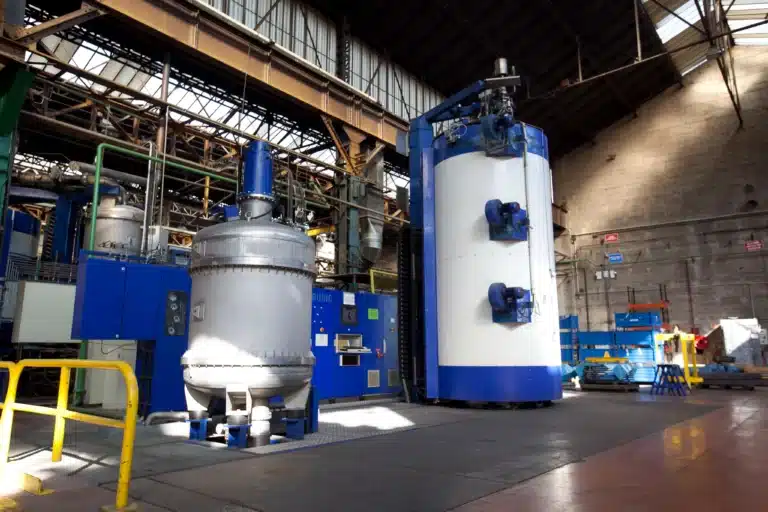
In the Thermilyon Group, several treatment technologies are used to meet the specific requirements of each part and each grade of stainless steel. These include Thermi-SP low-temperature thermochemical treatment, which significantly increases hardness while preserving corrosion resistance. Suitable for austenitic steels such as AISI 304 or 316, this technique creates a hardened surface layer without the risk of deformation. The process is carried out in a controlled atmosphere, guaranteeing perfect reproducibility.
Another proposed solution: ion nitridingalso known as plasma nitriding. This high-precision vacuum treatment creates an extremely hard surface layer, while maintaining the anti-corrosion properties of stainless steel. It is particularly effective on martensitic or ferritic steels, often used in structural applications. This type of stainless steel hardening considerably improves fatigue and friction resistance, particularly on mechanical parts subject to cyclic loads.
These technologies are not set in stone. Depending on the nature of the parts and their use, the Thermilyon group also offers tailor-made combinations: thermochemical treatments combined with vacuum deposition, or successive treatments to reinforce certain critical areas. This approach makes it possible to optimize the overall behavior of the part without compromising on quality or production times.
Concrete applications in the automotive sector
In many concrete cases, the benefits are clear. For example, the treatment of stainless steel injection components hasincreased their wear resistance by over 40%, while maintaining their dimensional accuracy. Similarly, exhaust parts subjected to high temperatures have seen their service life extended by hardening the targeted stainless steel, without altering its chemical behavior. These examples clearly illustrate the value of in-depth technical support, based on a detailed understanding of customer needs and real-life constraints.
Stainless steel hardening is an essential technical lever for meeting the growing needs of the automotive sector. By extending the life of parts while guaranteeing their dimensional stability, it plays an active role in increasing vehicle reliability. The Thermilyon group has established itself as a trusted partner to help manufacturers meet these performance requirements, by offering tailor-made solutions adapted to each application.