
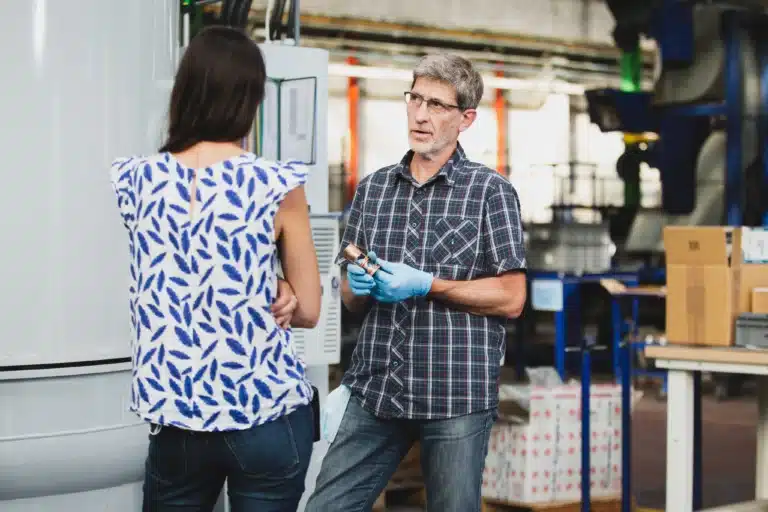
The impact of the environment is playing an increasingly important role at the heart of manufacturers' production strategies. Today, heat treatment is asserting itself as a little-known but powerful lever for sustainability. Long perceived as an energy-intensive process, it is undergoing a profound transformation. In addition to immediate energy consumption, heat treatment's full ecological potential lies in extending the service life of mechanical parts.
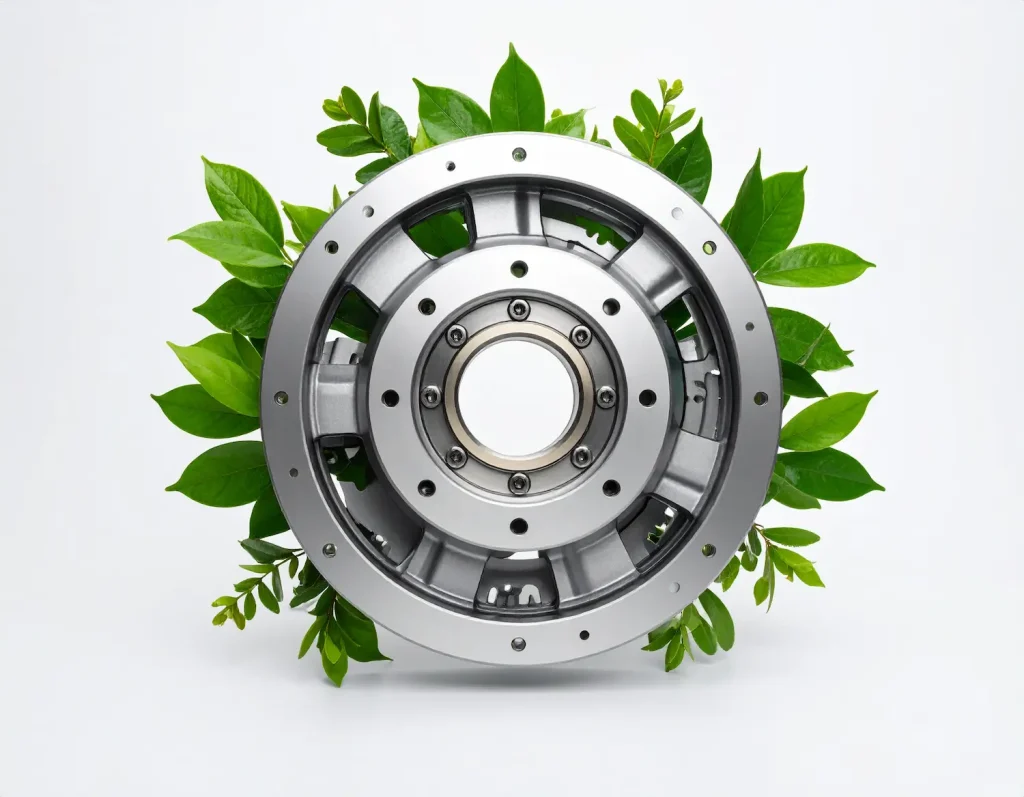
Better treatment for less consumption
Heat treatment modifies the structure of metals to enhance their mechanical properties: resistance to wear, fatigue, corrosion, deformation, etc. A correctly treated part can thus see its service life double, triple or even triple, depending on its use.
And longer service life means less frequent replacement, maintenance, production of new parts and transportation. In other words: fewer raw materials extracted, less energy consumed, less waste generated. This virtuous circle is one of the pillars of a more sober and responsible industry.
Contrary to popular belief, well-designed heat treatment is not an energy luxury. When designed to optimize the performance of treated parts, it becomes a powerful eco-design tool. It enables :
- Optimize the service life of mechanical components, even in extreme environments (automotive, aeronautics, medical, etc.).
- Reduce the indirect carbon footprint associated with the manufacture, transport and maintenance of spare parts.
- To support industrial sobriety initiatives without sacrificing performance.
The true ecological impact of heat treatment
In an industrial context undergoing an ecological transition, Cetim helped the Thermilyon Group quantify the environmental impact of its heat treatment processes. The aim: to compare technologies and steer choices towards more sustainable solutions.
The impact of different treatment technologies was assessed, taking into account 16 indicators such as ozone formation, water and material consumption. This analysis was based on the EcoInvent database.
Thus low-pressure carburizing has the lowest environmental impact (3.2 kg CO₂ eq/h) while delivering similar performance to gas cementation.
Gas and ion nitriding processes offer a good compromise between metallurgical performance and environmental impact. Tempering and gas quenching, although less energy-intensive, are variable depending on the configuration.
Rethinking ecology through sustainability
Rather than focusing on the immediate reduction of emissions or energy consumption during processing, it is essential to adopt a lifecycle vision. Heat treatment, by considerably increasing the robustness of parts, is fully in line with this logic. It enables us to produce less, repair less and throw away less - and thus reduce the overall impact of industry.