


The term "alloy" refers to the product of fusion between a base metal, often foundry aluminum or aluminum and magnesium, and another element, such as carbon or another metal, thus enriching the chemical composition of the alloy. There is a huge variety of alloys, among which light alloys, mainly based onwrought aluminum, stand out. These materials are used in numerous industrial sectors, such as aeronautics and sports and leisure, thanks to their remarkable properties such as wear resistance, natural lightness and thermal conductivity.
Softening heat treatments for light alloys
Light alloys, particularly those based onwrought aluminum oraluminum and magnesium, can generally benefit from two main types of heat treatment: softening or hardening. The primary aim of the softening method is to homogenize the chemical composition and structure of the parts, giving them a more uniform and optimized metallographic structure. This is commonly achieved by annealing, which plays a crucial role in improvingmachinability and shaping quality, making the manufacturing process more efficient and less complex.
A stress-relieving treatment can also be applied to stabilize the dimensions of the part, making it much less likely to deform as a result of mechanical or thermal action. This method is also very well suited to welded parts, consolidating their structure. In fact, annealing such materials makes welds less brittle. This method is particularly used on parts for the aeronautics industry.
Thermal hardening treatments
With a density three times lower than that ofstainless steel,cast aluminum is attracting the attention of manufacturers, mainly for its natural lightness. Nevertheless, through thermal hardening processes, it is possible to triple the mechanical strength of parts designed from this light metal. Indeed, after such treatments, strength can exceptionally rise to 600 MPa, underlining the effectiveness of these methods in improving the mechanical properties of alloys.
Only three families of aluminum-based light alloys can undergo heat treatment for hardening. First, materials belonging to the " 2000 series " class, i.e., aluminum and copper alloys. Secondly, elements from the " 6000 series," containing aluminum, magnesium, and silicon, are also suitable. Finally, parts from the " 7000 series," composed of aluminum and zinc, can also benefit from hardening treatments.
Three types of treatment for hardening light alloys
Aluminum-based light alloys in the 2000, 6000 or 7000 series can be treated in three different ways: T4, T6 or T7. The first technique involves heating parts to around 500 degrees Celsius, followed by water quenching. This step enables the part to cool down very quickly, so that its structure is better fixed at room temperature. Next, the alloy undergoes an air-curing phase: at room temperature, the solid solution gradually forms precipitates that harden the material.
T6 , on the other hand, does not include a room-temperature curing phase. This technique involves first solution-hardening the parts at around 500 degrees. This is followed by quenching and tempering at 140/160°C. The third method, called T7, includes two consecutive tempering phases. As with T4 and T6, this treatment results in the appearance of precipitates that contribute to the hardening of aluminum alloys.
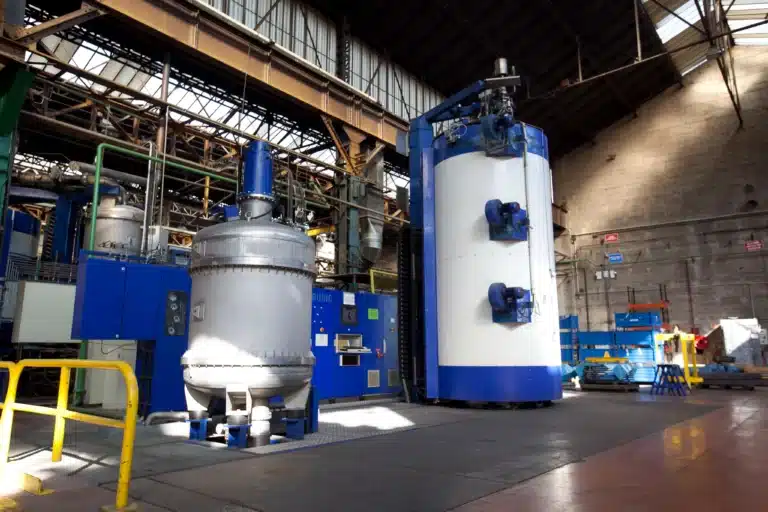
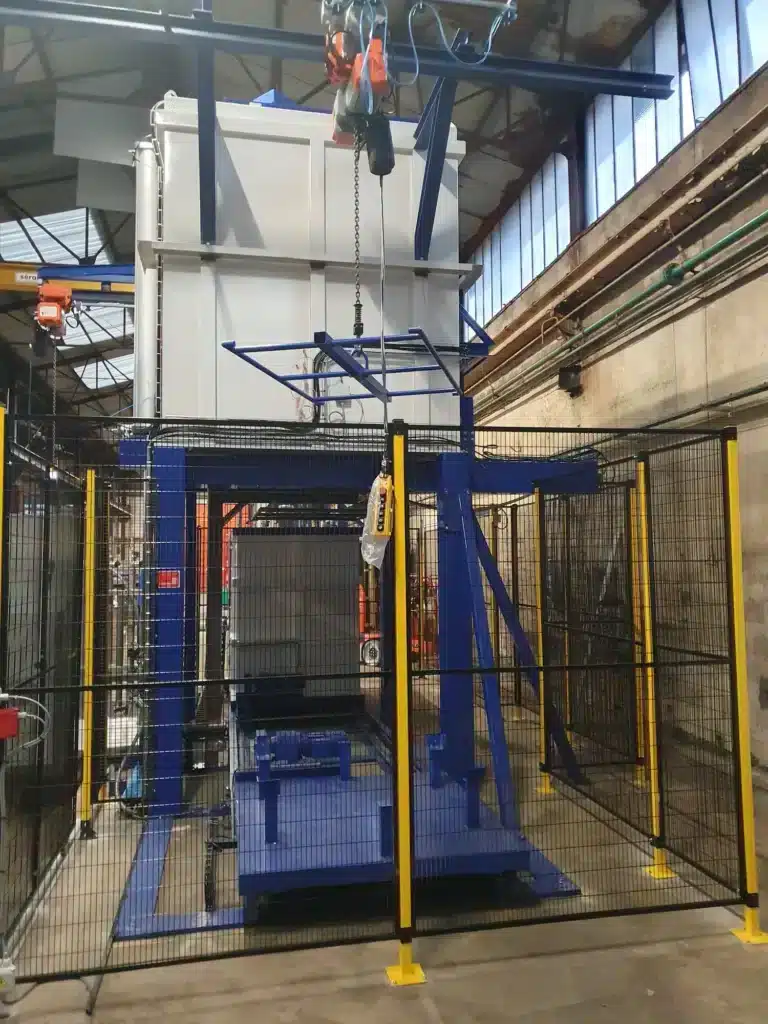
Since the phase diagram of aluminum alloys remains extremely sensitive to temperature, it is necessary to have the appropriate equipment to process them. In the case of quenching and tempering, the furnaces in which the parts are placed must have an accuracy of plus or minus 5, or even 3 degrees Celsius, depending on the method chosen. This value guarantees the final homogeneity of the parts and, in fact, the success of the operation. For example, the Thermilyon group has this type of furnace, which has earned it selection by the world leader in the manufacture of carabiners for sports and leisure. These items, although discreet in appearance, must support the weight of a person while remaining extremely light, which is why it is crucial that the treatment applied guarantees excellent mechanical strength while maintaining the lightness of the part. THERMI-LOIRE, a unit of the group, also has equipment for treating aluminum alloys for aeronautical applications.
Vacuum deposition: another solution for improving part strength
Les dépôts sous vide, utilisés pour améliorer la résistance à l’usure des métaux, s’adaptent parfaitement aux alliages légers à base d’aluminium. Ces traitements peuvent s’opérer à basse température <200°C, ce qui convient tout à fait à ce matériau particulier, qui fond entre 600 et 700 degrés. Les pièces fabriquées en alliages d’aluminium supportent très bien les revêtements comme le DLC, Diamond Like Carbon, et le nitrure de chrome produit par PVD Magnétron, qui renforce également la résistance à la corrosion.
Thanks to their exceptional lightness and mechanical strength after heat treatment, aluminum alloys are among the materials of choice in many industrial sectors, such as aeronautics and sports and leisure. Softening treatments, such as annealing or stabilization, are guaranteed to homogenize these parts, giving them greater dimensional stability and a more uniform metallographic structure. On the other hand, hardening treatments such as quenching or tempering can also increase the mechanical strength of certain aluminum alloys. Finally, vacuum deposition can also be used in most cases, the most important factor being, whatever the method chosen, the availability of extremely precise furnaces.