


Home PVD Prestige-Rosé range

Pink copper PVD coatings

From old pink to bright pink

Our PVD coatings make it possible to obtain a variety of pinks, from rose gold to copper pink or a patina pink.

The part's surface finish contrasts the final color and adds depth, brilliance or shine, depending on your project requirements.

These coatings are particularly appreciated in the watchmaking and jewelry markets. They sublimate all your components and products with modernity and elegance.

In addition to their intense color, our pink coatings have particularly interesting properties:

- Wear and scratch resistance thanks to hardness exceeding 3000 HV (Vickers hardness)

- Biocompatibility

Features and benefits of copper-pink pvd coatings

Pink PVD coatings offer a number of aesthetic and functional advantages

dazzling color

Personalize your image

PVD coatings offer a complete palette of pinks, with different finishes.

Durability

Improve the lifespan of your products

Thanks to their functional properties, coatings protect your products and components from scratches and daily wear and tear.

eco-responsibility

Choosing sustainable processes

The use of PVD technology avoids the use of pollutants, with no CO2 emissions or discharges harmful to the environment and human beings.

To study and order your pink cladding project

To help us study your project, please send us :

- Plan of the part (including any areas not to be coated).
- Material of the part to be coated.
- Expected color and finish (satin, gloss, matte, etc.)
- Number of parts per shipment per year.

Ask for a quote

business sectors concerned

banner representing the decorative and luxury markets with jewelry and a watch
Decorative and luxury market

    Our various documentations

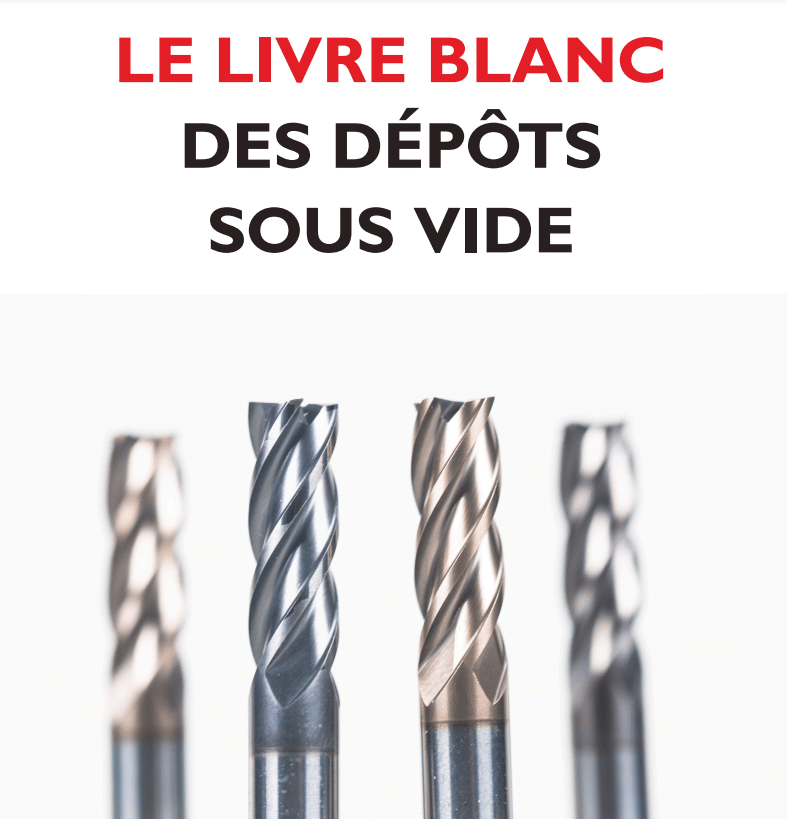
    Vacuum deposition white paper

    See all our documentation

    Our FAQs

    What is vacuum deposition?

    Vacuum deposition is a surface treatment used to deposit a material or alloy on a mechanical part.

    The use of vacuum technology ensures a perfectly clean, non-polluting process.

    It is not subject to REACH legislation.

    How do I choose the right deposit method?

    The deposition method depends above all on the nature of the coating to be deposited and the substrate.

    If the substrate cannot be heated to high temperature, the deposition must be carried out using low-temperature technology.

    If the coating to be deposited consists of a solid element (metal or graphite target), a physical process such as PVD is used. If the coating consists of a gas or liquid, a chemical process such as CVD or PACVD is used.

    What are the advantages of PVD technology?

    This process greatly increases resistance to wear, abrasion, friction and corrosion. As a result, component life is greatly extended.

    Standard thicknesses are of the order of 3µm and deposition is carried out on finished parts.

    What's the difference between PVD and PACVD?

    PVD is physical vapor deposition. The element to be deposited is obtained by evaporation or sputtering via a physical process. PACVD is plasma-assisted chemical vapor deposition. The element to be deposited is obtained from chemical reactions. Plasma enables this chemical reaction to take place at lower temperatures.

    What do I need to know when consulting a customer or placing an order for vacuum deposits?

    Nature of steel or carbide, if steel treated, please specify the treatments carried out. Desired characteristics (hardness), quantities of parts per shipment and per year, drawings of the part and specifications. If possible, how the part will be used and its final purpose.

    See all FAQs

    Do you have a question or a need?

    Our dedicated decorative coatings team is here to help.

    Contact us

    Our latest news

    Read our latest articles on metal treatment.
    close-up of an aircraft engine illustrating the importance of hardness in safety-critical components
    How can we optimize the hardness of critical and safety components?
    In many industrial sectors, the reliability of critical components is non-negotiable. Whether it's parts used in the automotive, aeronautics, medical or industrial tooling industries, each component must withstand intense mechanical stress while maintaining its performance over the long term. The hardness of a component has a direct influence on its resistance to [...]
    October 29, 2025
    How can we optimize the hardness of critical and safety components?
    heat treatment of massive automotive parts such as crankshafts
    Heat treatments for massive parts in the automotive industry
    The automotive industry relies on components whose performance and reliability must remain constant under demanding operating conditions. Among these, massive parts occupy a strategic position. They transmit power, support loads and ensure the safety of drivers and passengers alike. To ensure that these components can withstand the stresses [...]
    October 22, 2025
    Heat treatments for massive parts in the automotive industry
    PVD and DLC coatings: what are the differences and what uses?
    In demanding sectors such as aerospace, medical, automotive and tooling, surface coatings play a decisive role in the performance and durability of parts. They improve wear resistance, limit friction and improve the adhesion of products to the surface of treated parts. Among the most [...]
    September 29, 2025
    PVD and DLC coatings: what are the differences and what uses?
    Low-pressure carburizing furnace for various industrial applications
    Focus on low-pressure carburizing and its industrial applications
    Mastery of heat treatments is an essential lever for guaranteeing the performance of mechanical parts used in demanding environments. Among the most advanced processes, low-pressure carburizing stands out for its precision and remarkable results. This thermochemical treatment, implemented by specialists such as the Thermilyon Group, meets the most stringent [...]
    September 25, 2025
    Focus on low-pressure carburizing and its industrial applications
    illustration of a person carrying out quality control after heat treatment or vacuum coating
    What quality controls are carried out after heat treatment or vacuum coating?
    In industry, heat treatment and vacuum deposition play a decisive role in improving the performance and durability of metal or alloy parts. To ensure that each part retains its expected mechanical properties and reliability, post-treatment quality control is an essential step. This article describes the main tests performed [...].
    September 3, 2025
    What quality controls are carried out after heat treatment or vacuum coating?
    caregiver sterilizing pvd-coated medical devices
    What are the advantages of vacuum coatings for medical devices?
    In the medical field, every detail counts to guarantee the performance, safety and reliability of instruments used in operating theatres and hospitals. Vacuum coatings have become the benchmark solution for meeting the stringent requirements of the medical sector. These cutting-edge technologies improve the surface characteristics of [...]
    September 24, 2025
    What are the advantages of vacuum coatings for medical devices?